

Why Wandering Outside Your Lane Makes You A Better Problem Solver
Why wandering outside your lane can make you a better problem solver.

People say you should stay in your lane.
But I’ve always liked wandering into other roads.
(For context, I’m a SaaS Lifecycle Marketer, but I can build a GTM and can write copy AND content. I’ve recently dabbled into eCommerce email marketing as well.)
Sometimes nothing comes out of it.
But most of the time, that curiosity gave me an advantage I didn’t expect.
Recently, it helped solve a SaaS email problem that had been stuck for nearly a year.
An e-Commerce strategy solved our SaaS email deliverability problem
A year ago, this SaaS domain was blacklisted.
I got hired to fix it and build an onboarding strategy at the same time.
I’ve solved it. Multiple times.
But the problem kept coming back.
Now, I believe it’s been solved for good.
We tried the deliverability expert’s advice which wasn’t technically from SaaS at all.
It was an eCommerce-style engagement strategy.
Different assumptions about user behavior.
Different segmentation logic.
Different ways of warming up engagement.
Slowly, the monitors started calming down.
The system stabilized…and we got:
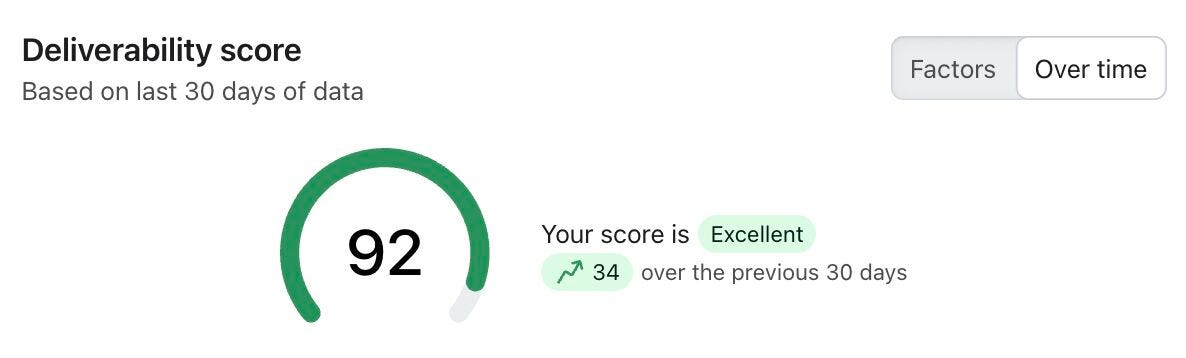
92 Deliverability Score on Klaviyo.
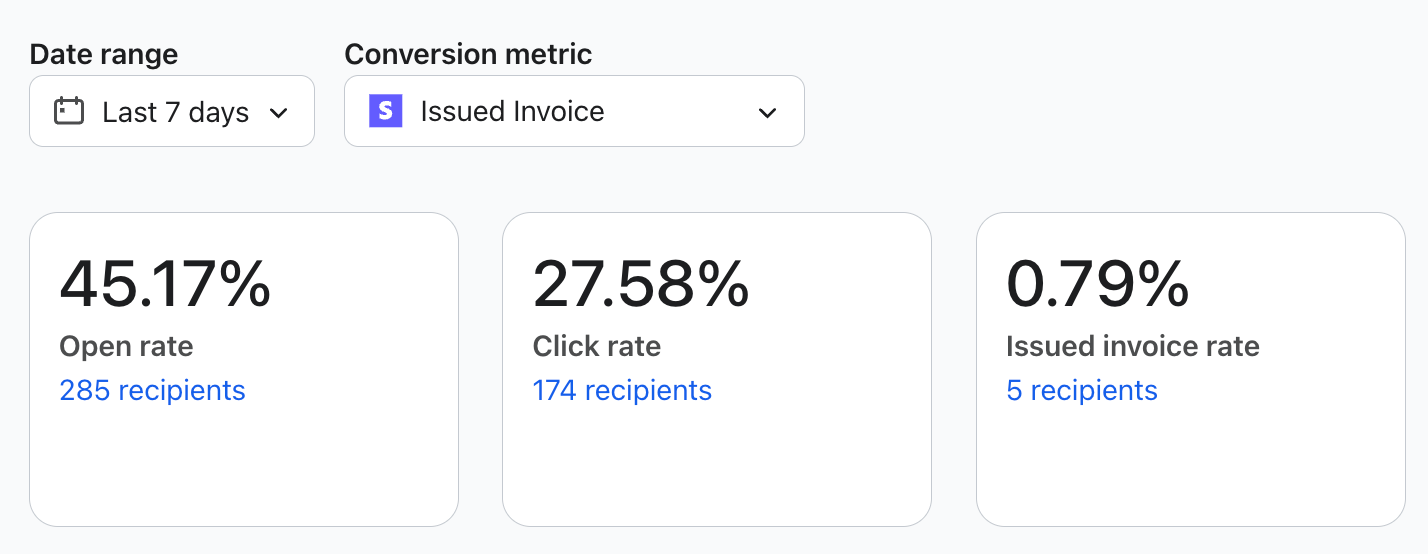
50% opens and 27% click rate?!
And a calm GlockApps monitor and an 90% all-green PostMaster Tools dashboard.
If you’re into email, follow my SaaS Email Code Newsletter on LinkedIn.
I drop my email tactics there.
And that moment reminded me of something I’ve noticed over and over again in my work:
Multipassionates often have a knowledge edge.
Not because they know everything.
But because they’ve seen how different systems solve similar problems.
I’ve fallen in love with multidisciplinary thinking even more after hearing it as a Stoic practice from one random YouTube video.
But random dabbling in different lanes isn’t the way. You have to build on top of what you have already started…and you have to cross lanes strategically.
How to cross lanes strategically
The real advantage comes from intentional cross-pollination.
Here are a few ways multipassionates can cross lanes without becoming scattered.
1. Borrow solutions, not identities
You don’t have to become a new professional every time you explore another field.
Instead, borrow mechanics and ideas.
For example, you might learn from:
video games how progress bars motivate people to keep going
teachers on how they make learning easier
fitness apps on how streaks build consistency
The goal isn’t to switch industries or reinvent yourself every few months.
The goal is to import useful tactics and adapt them to what you already do.
2. Study adjacent systems
Every field has neighbors.
If you work in one area, it helps to study the systems around it.
In Naval Ravikant’s essay “How to Get Rich (without getting lucky)”, he argues that there isn’t really a single skill called business. Instead, what matters are the foundational disciplines that help you understand how the world works.
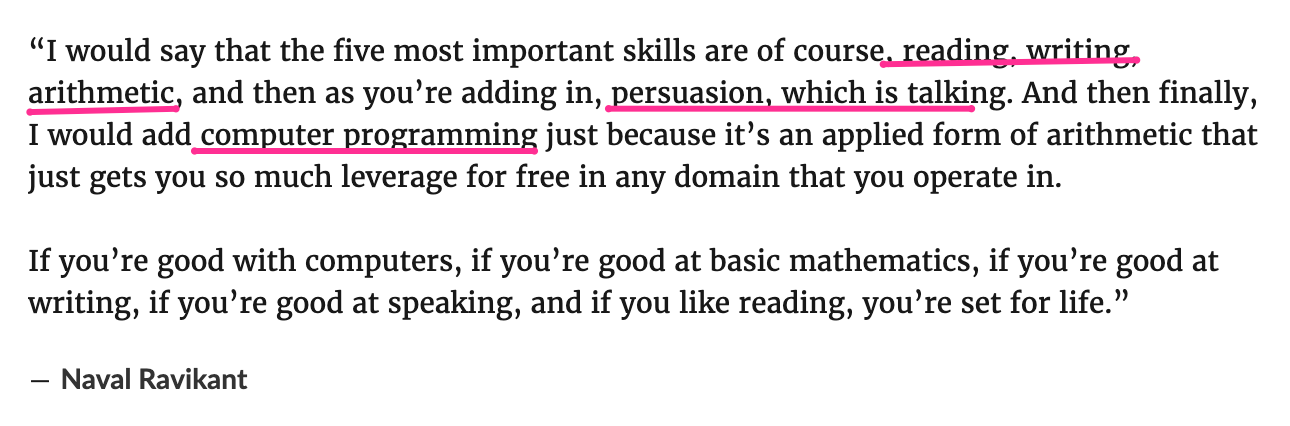
For me, I build a foundation in transferable skills like:
reading to absorb ideas quickly
writing and speaking to communicate clearly
mathematics and logical thinking to reason about decisions
technology and computers to understand leverage and scale
psychology and behavior design to learn how people move
These aren’t “business skills” in the narrow sense.
They’re fundamental systems of thinking.
And once you understand them, you start seeing the same patterns everywhere.
Trust.
Motivation.
Curiosity.
Commitment.
A problem that looks like a business problem might actually be a communication problem.
A problem that looks like a growth problem might actually be a psychology problem.
And when you see that clearly, you suddenly have many more ways to solve it.
If you did, would love for you to share it!

3. Build a mental library of patterns
Over time, multipassionates develop something powerful: pattern recognition.
You start noticing when a problem resembles something you’ve seen before.
A motivation problem is actually a habit problem. (common in fitness)
A sales problem might resemble a storytelling problem.
A churn problem might resemble a lack of communication problem.
For me personally, I’ve learned how to apply SaaS onboarding tactics on my kid to teach him lessons quickly. And my writing community when I want them to engage a lot during our LinkedIn challenges.
When you see these patterns clearly, you’ll have more creative ways to approach the issue.
And new problems wouldn’t feel so new after all.
4. Keep one core expertise
This is important.
Multipassionates thrive when they have one anchor skill.
Mine happens to be email marketing.
That anchor gives you credibility and easy recall on platforms.
Everything else becomes supporting perspective, not distraction.
And this is more important: Claim one front offer on your social platforms. More on this in the next issue. This is how I don’t dilute my expertise and confuse my audience.
5. Translate ideas between worlds
The real superpower of multipassionates isn’t just learning many things.
It’s translation.
Taking an idea from one field and applying it somewhere unexpected.
It’s the foundation of creativity, innovation, and out-of-the-box thinking.
But translation also helps you connect with different people.
When you understand ideas from multiple domains, you can explain the same concept in different ways:
through logic and frameworks
through stories and metaphors
through practical examples
The core idea stays the same.
Only the language changes.
And that makes it much easier to share, persuade, and sell your ideas.
Sharpen your knowledge edge
Staying in your lane keeps you safe, but crossing lanes keeps you dangerous.
The next time you’re stuck on a “marketing” problem, stop looking at marketing blogs. Look at how a chef manages a kitchen, how a pilot runs a checklist, or how your favorite RPG game handles leveling up.
When you feel like you’re stuck, try seeing it at a different light.
In 2026, being a multipassionate isn’t just a personality trait, it’s your competitive moat. AI is the world’s best specialist; it can do “one thing” perfectly.
But it still struggles to connect the dots between two seemingly unrelated fields. It can’t feel the rhythm of a restaurant line and apply it to an email workflow. That synthesis? That is your uncopyable edge.
And I have the proof.
I’ve been tracking job boards for months, and the signal is clear: Companies are hunting for multipassionate creators. They want the bridge-builders who can see the patterns AI misses.
Stay tuned for the next issue.
This post is public, so feel free to share it.